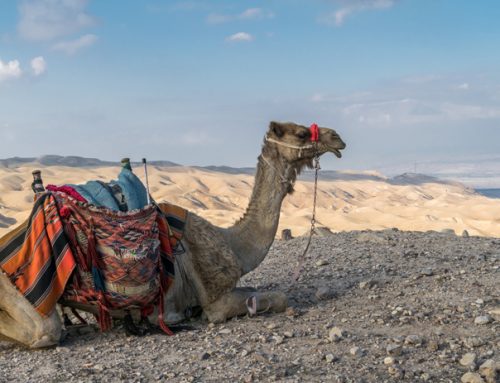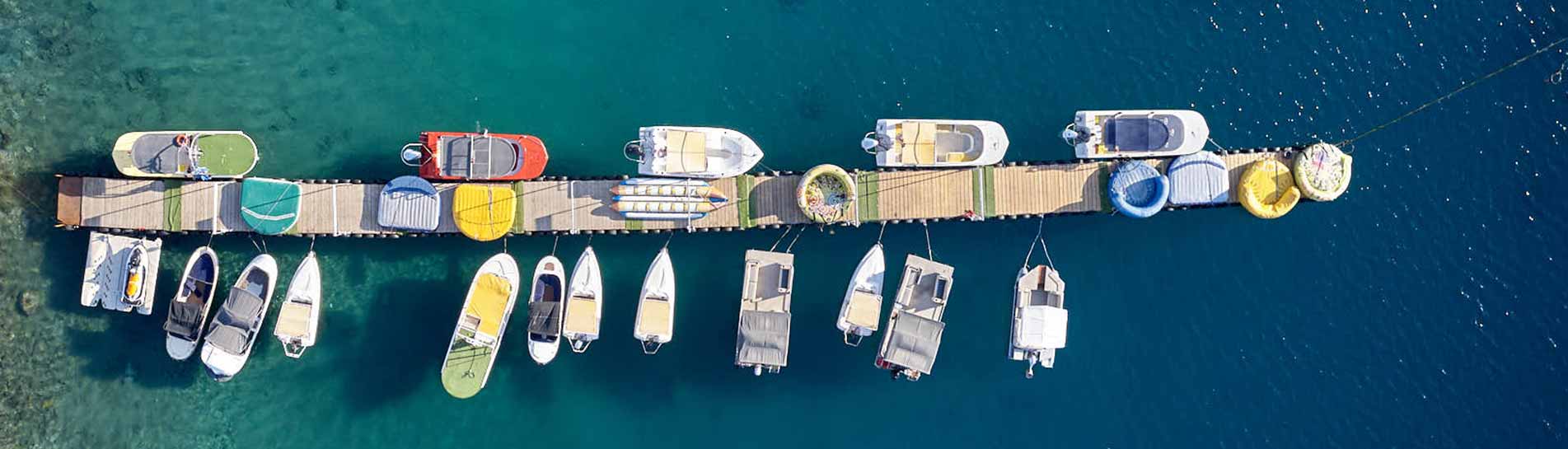
Eilat is the most southern city in Israel and is located at the tip of the expansive desert spanning the entire Negev and Arava regions. Recommendation for a desert trip that will provide you with a unique experience of nature
.
Reut Gawiser
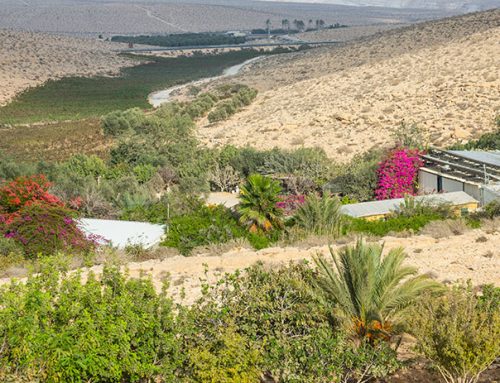
The Israeli desert covers the entire southern part of Israel, with its tip featuring the desert coastal city of Eilat. The Negev is part of the global strip of deserts of which parts are the Sahara desert and the Sinai Peninsula, the former being particularly unique for its proximity to the Mediterranean Sea and the Red Sea. In the Negev desert you will find some of the most famous tourist attractions in Israel, as well as desert towns for tourism not to be missed.
It is highly advised to dedicate at least four days to this fascinating region. Here is a recommendation for a track that has a little bit of everything and will give you a taste of the desert experience:
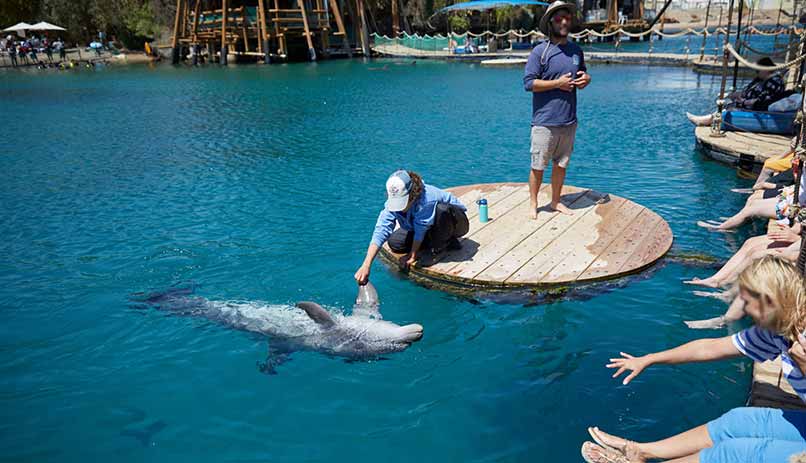
The Dolphin reef in Eilat. Photo by Lior Avitan
Day One: Eilat
Morning: We begin the track in Eilat. Ramon Airport, the new international airport just recently inaugurated, opens up to the world the option of arriving at the resort city quickly and easily. From this airport, you will have free shuttles at your disposal to any hotel in the city.
There are other routes leading to Eilat as well.
Noon-afternoon: After arriving and getting settled in the hotel, chill out for a bit. On Sundays, Tuesdays and Fridays at 10:00 a.m., you can enjoy free yoga practice on the beach with a professional instructor and right after that – what is more relaxing than the Dolphin Reef beach with its friendly dolphins?
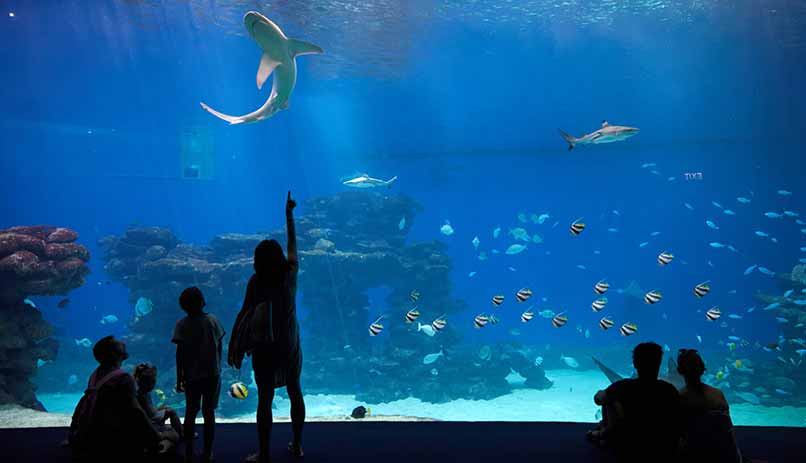
The shark pool in Coral world in Eilat
Eilat features the only dolphin reef in Israel; the dolphins are not kept in captivity at the reef, but are free to roam the open sea and return at any time. They are very friendly and like to approach the visitors on the beach adjacent to the reef or on the float. On the reef premises, you can enjoy the magnificent beach only accessible to the reef visitors, a unique SPA facility with three seawater pools for relaxing Watsu treatments, sauna and pampering, romantic massage treatments.
Evening: During the evening hours, you can enjoy walking around the city’s promenade, which offers rides for kids as well as restaurants, cafés, shops and more.
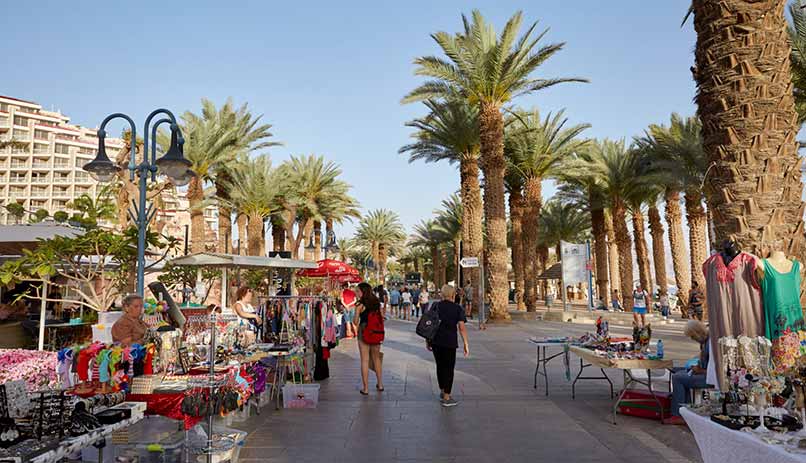
The promenade in Eilat. Photo by Lior Avitan
Day Two: Eilat
Morning: You can start the second morning at the Underwater Observatory Marine Park is one of a kind in the world and presents to the visitors the vibrant marine life of the Gulf of Eilat and the Coral Reef. Throughout the day, the park holds feeding of the observatory animals, such as sharks and various fish, all feedings are accompanied by a guide.
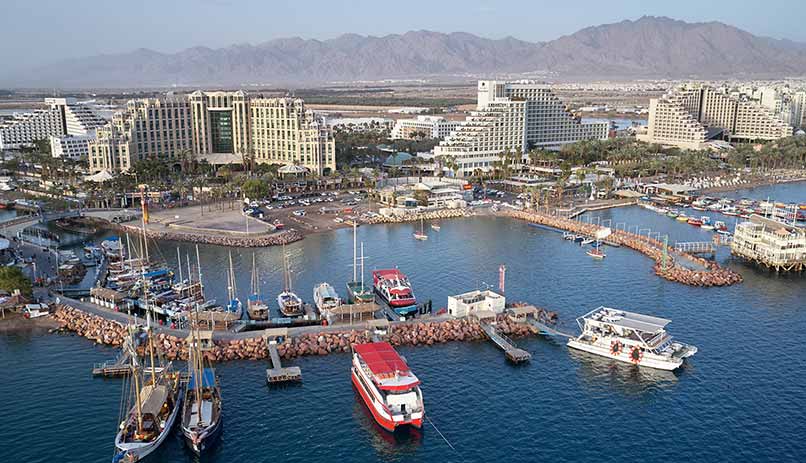
Eilat Bay. Photo by Lior Avitan
Midday: Another attraction, for the brave only, is the Nightmare Horror Maze. In total darkness and without knowing what to expect, you will tackle a maze full of super scary surprises. Who will survive it all? About 40,000 visitors have not been able to overcome the fear and left in the middle of the maze. The attraction is designed for 14 year-olds and above.
Evening: The remainder of the day is best spent in one of the city’s excellent restaurants.
Day Three: Masada and Arad
Morning: prepare to visit one of Israel’s beautiful historical sites, also declared a world heritage site by UNESCO – Masada. Masada is a fortress built most likely around 80 B.C. It was made famous by King Herod, who escaped there and settled down with his men. Following his victory over the uprising, he turned Masada into his palace and built grand structures atop it.
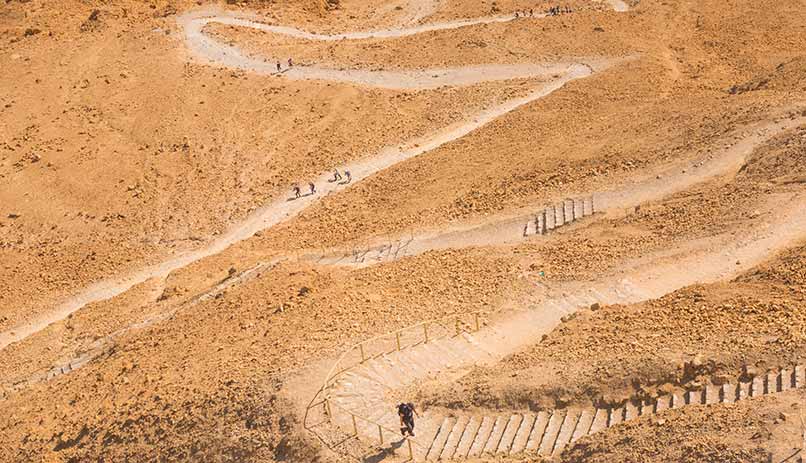
The snake path in Masada
During the great Jewish uprising against the Romans, the last of the rebels who escaped Jerusalem and the entire Judah kingdom settled on top of Masada and became a symbol of man fighting till death for his freedom.
Today, Masada is a national park in which you can tour its archaeological structures that have sustained thousands of years in the desert, visit the museum which tells the story of this unique fortress and walk along the various trails at the foot of Masada. The National Park runs a cable car that operates throughout its opening hours and takes the visitors up to the upper observation point, but seasoned hikers will be able to climb up the trail known as the Snake Path, named that because it resembles a winding snake.
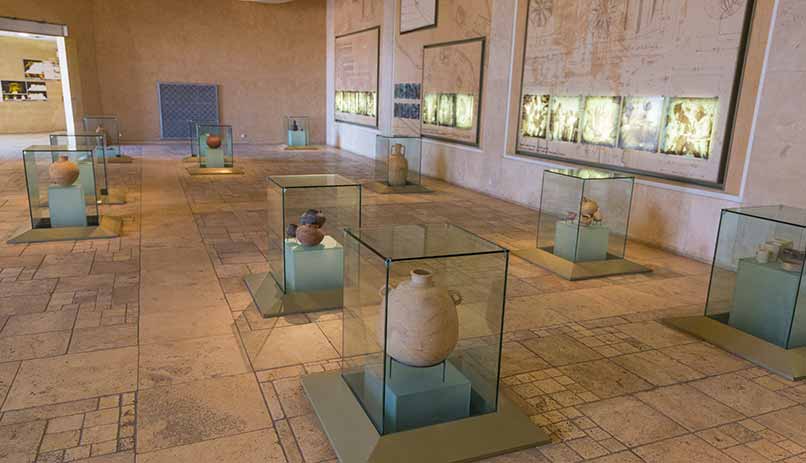
The Visitors’ Center in Masada
Midday: Arad is a small southern town known for its clean, dry air that benefits breathing. In recent years, it has become a town that absorbs and fosters artists and creators of various disciplines. It is worth visiting the Arad Contemporary Art Center displaying changing exhibits of contemporary Israeli and local art. The Arad Contemporary Art Center is open on Wednesday, Thursday and Saturday. Admission is free, and group tours can be arranged.
Evening: Not far from the town of Arad, is Kfar Hanokdim, a desert-style resort offering a few types of accommodation and a full desert experience. You can choose between sleeping in a family or double tent, a room or a sleeping desert canopy. Each room is equipped with beds, electrical outlets, air conditioning or heating depending on the season, etc. You can order breakfasts or dinners of Bedouin-type cuisine and ingredients used by desert residents, and combine attractions such as camel rides and terrain biking.
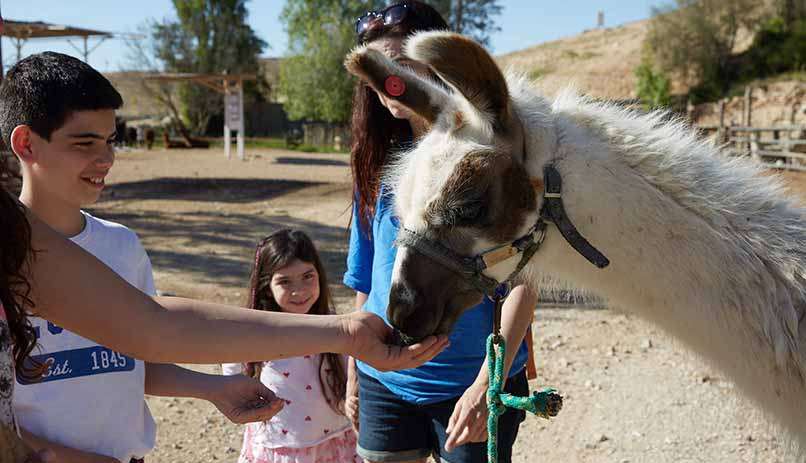
Alpaca farm in Mitzpe-ramon. Photo by Lior Avitan
Day Four: Onto Mitzpe Ramon
An hour and a half away from Arad is the desert town of Mitzpe Ramon. Near it is the Ramon Crater.
Morning: Open the morning with a trip to the ancient Nabatean city of Avdat, an archeological site that reveals the ruins of an ancient city thousands of years old. The Avdat National Park is a world heritage site featuring two Byzantine churches from the birth of Christianity, a city Hamam that serves as a bath house for the city’s residents as well as a Roman fortress and a burial site.
Midday: It is worthwhile visiting the nature reserve and the visitor center of the Great Crater. The Ramon Crater is a leftover from powerful meteor that hit the Earth millions of years ago. The crater is part of Matsok Tsinim desert nature preserve, which features unique nature phenomena unseen anywhere else in the world. At the Visitor Center, you will be able hear about the life story of Israeli Astronaut, Ilan Ramon, as well as about the crater and the nature reserve surrounding it.
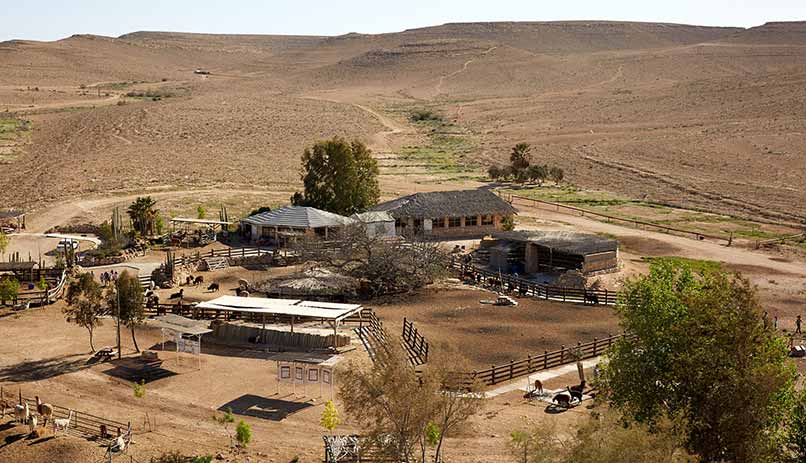
Top view of Alpaca Farm. Photo by Lior Avitan
Immediately following, you can visit the Alpaca Farm. On the farm, you will meet up close and feed the alpacas and lamas, labor beasts brought to Israel from the Andes of South America, but that have integrated wonderfully into the Israeli desert. Little kids can ride the lama or enjoy one of the arts and crafts workshops on site. The farm runs a lama wool processing factory in which you can buy a variety or ready-made items or alpaca wool for knitting.
Evening: As evening falls, the Mitzpe Ramon sky is covered in a glorious blanket of stars. It is such exquisite sight, no wonder the Ramon Crater was declared a natural starlight nature reserve. The Astronomy Center staff will build a professional mobile stargazing observatory, including detailed explanations, professional telescopes, etc. You can also order indulging additions, such as dinner served under the sky. Mitzpe Ramon features a variety of hotels and guest houses in which you can sign off on four days of peacefulness and desert.