Churches of Jerusalem are a wonderful way to discover the history, architecture and art of the city, in the past and present, so whatever your religious believes are, why not include a few churches in your tour?
.
Jerusalem is a famous pilgrimage site for people from various religions and believes. It transforms the bible into vivid reality – one can actually see, feel, hear and touch the places where biblical heroes lived and died.
Jerusalem is home to monumental churches, which are part of the highlights of a Holy Land tour. These churches have prolific ancient history and beautiful architecture that makes them noteworthy to visit at any time of the year when visiting the city.
1. Church of All Nations
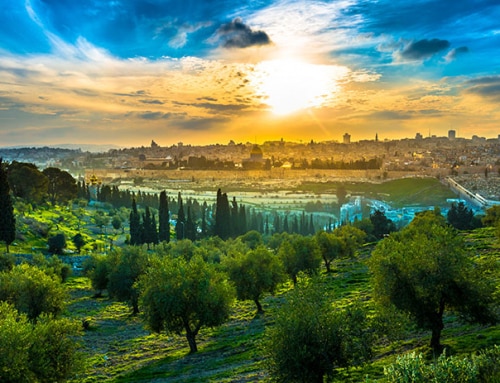
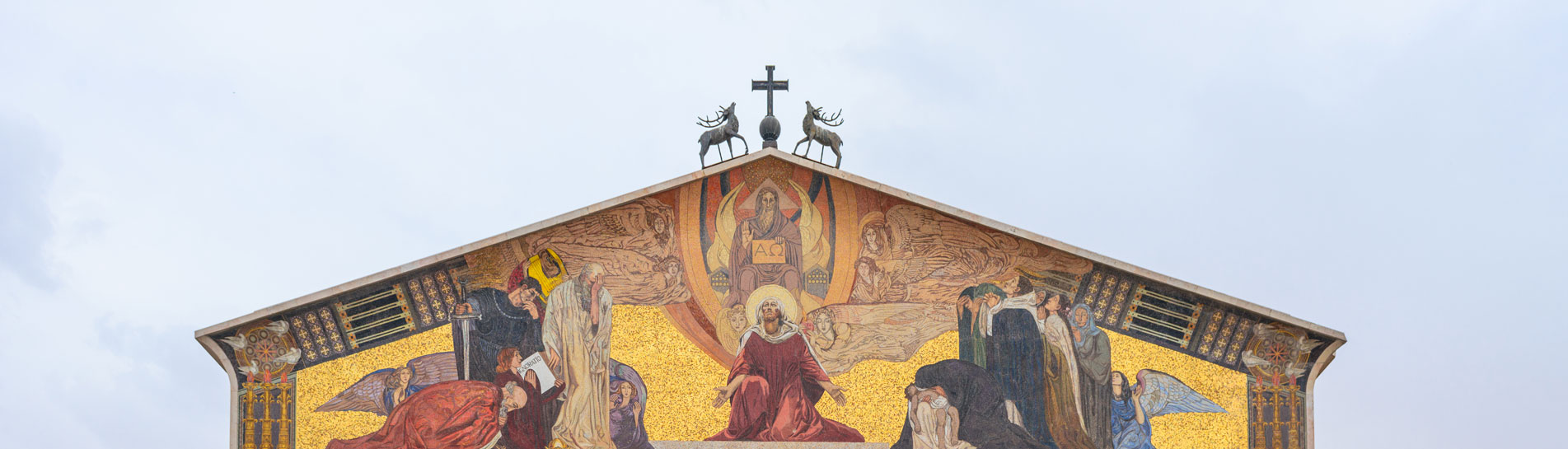
This is a 20th century Roman Catholic Church, also known as Basilica of the Agony at Gethsemane, was built in the place where Jesus was brought after having his last supper with his 12 apostles on Mount Zion. It is located in the Garden of Gethsemane in East Jerusalem, at the foot of Mount Olives. This Neo-Byzantine church was built in 1924 on the ruins of two older churches. Its ceiling has 12 domes, representing the 12 apostles. It contains several mosaics that represent the 12 nations that have contributed to fund it.
The stone in the center of the church is supposed to represent where Jesus leaned on during the night, before he was turned over to the Romans. On its left is a wall painting of Judas kissing Jesus. The flooring of the church still contains remnants of Byzantine mosaic. The church area is known for having eight beautiful olive trees that are believed to be over 2,000 years old.
The church is open daily from 8 am to 12 noon and from 2 pm to 5 pm in winter and until 6 pm in summer.
- Entrance fees : Free
- Dress Code: Modest attire required (covered shoulders and knees)
- Accessibility: Wheelchair accessible with assistance
- Getting There: Bus or walk from the Old City; near Lion’s Gate
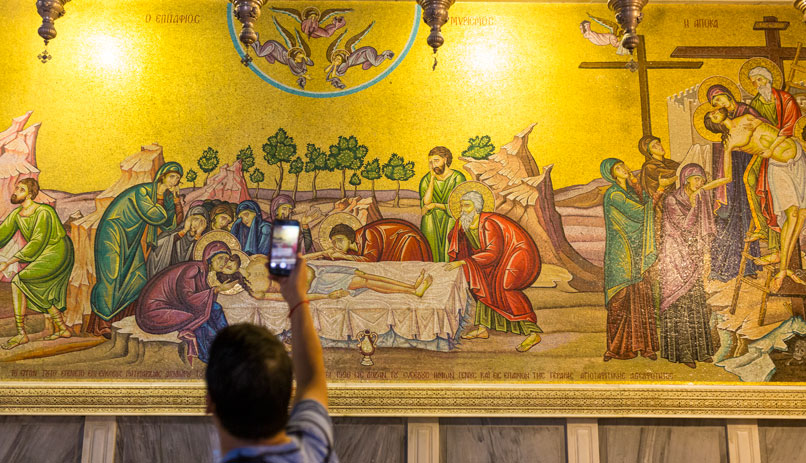
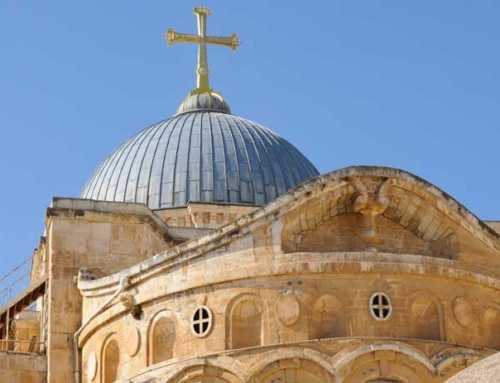
Church of the holy sepulchre in Jerusalem
2. Church of the Holy Sepulchre
This 12th century church is located inside the walled Jerusalem Old City within the Christian quarter. It is one of the most significant pilgrimage site for Christians because it was built on the site where Jesus died on the cross, was buried, and rose from the dead. The church of the Holy Sepulchre has been burned, destroyed, repaired, and restored many times, the current church was built in 1810.
The Rock of Calvary encased in a glass at the Altar of the Crucifixion, which is believed to be the place where the crucifixion occurred, is the most visited place inside the church.
The road leading to the church is called Via Dolorosa (“the way of grief” in latin). Jesus walked along this way from the place where he was sentenced to the location of the crucifixion, and many pilgrims chose to walk it as well, stopping at various stations. Every Friday, at noon, a procession of Franciscan monks walks the Via Dolorosa up to the Church of the Holy Sepulchre.
The Church is open 7 days a week from 5:30 am until 7 pm in winter and from 5:30 am to 8 pm in summer.
- Entrance fees : Free
- Dress Code: Modest attire required (covered shoulders and knees)
- Accessibility: Limited; uneven steps and narrow passages
- Getting There: Short walk from Jaffa Gate or light rail (City Hall station)
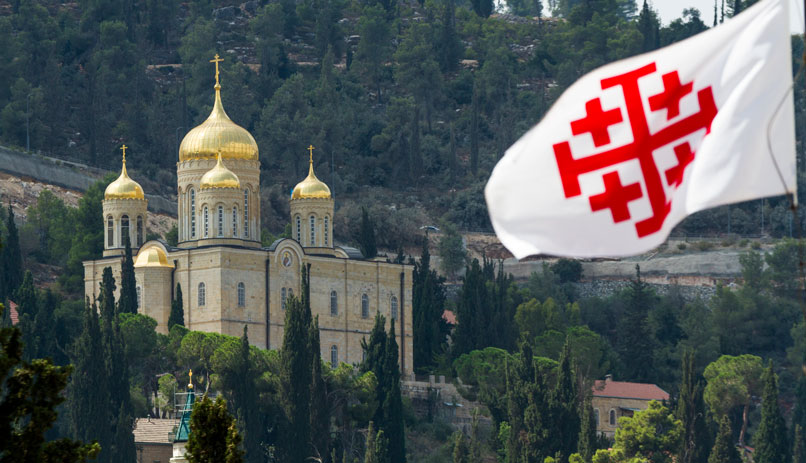
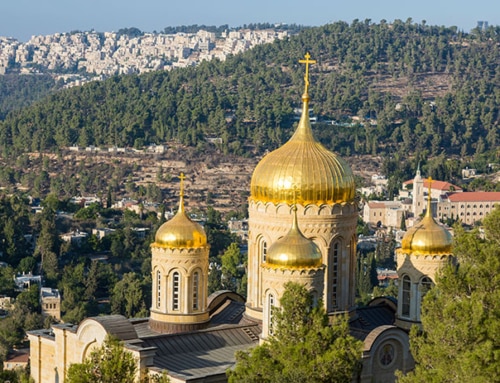
The big church in the gorny monastery complex in Jerusalem. Photo by Udi Goren
3. Dominus Flevit Church
This church was built in the mid-1950s on Mount Olives, opposite of the old city’s wall. It is designed to look like a tear, symbolizing Jesus’ tears. During its construction, archaeologists uncovered artifacts dating back to the Canaanite period. In the courtyard, there are reminds of Byzantine mosaic and a wine press.
The church is open daily from 8 am to 11:45 am and from 2:30 to 5 pm.
- Entrance fees : Free
- Dress Code: Modest attire required
- Accessibility: Not fully accessible due to steep hill
- Getting There: Walk from Lion’s Gate via the Mount of Olives path
4. The Russian Church of Maria Magdalene
One of the most beautiful churches in Israel, this church was dedicated by the Russian Czar in 1888. The body of the wife of Grand Duke Sergei, Elizabeth Fyodorovna, who was killed by the Bolsheviks during the Russian revolution, is buried in this church – there is a marble sarcophagus that contains her remains on the right side of the church. A marble pillar found across the entrance gate of the church signifies the place where Judas handed Jesus over to the Roman soldiers.
The church is open to visitors on Tuesdays, Thursdays, and Saturdays at 11 am.
- Entrance fees : Free
- Dress Code: Strict modesty; head coverings for women advised
- Accessibility: Not wheelchair accessible (steep stairs)
- Getting There: Walk from the Mount of Olives; not reachable by public transport directly
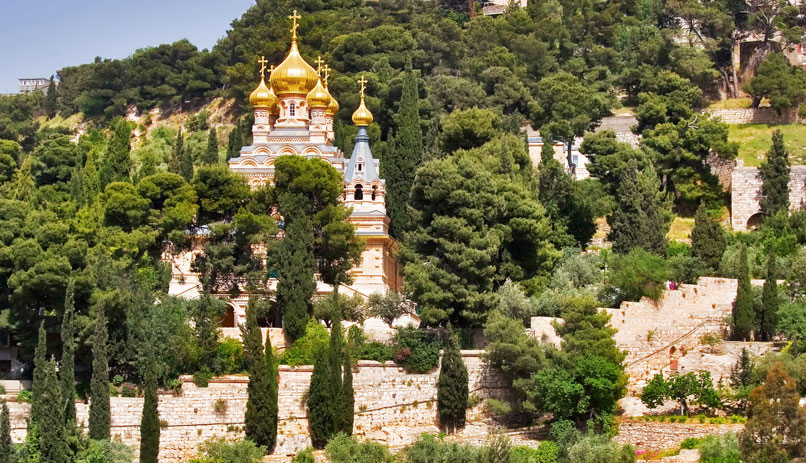
Maria magdalena russian church in jerusalem
5. Church of Mary’s Tomb
An Eastern Orthodox Church that was built in the 12th century on the remains of a Byzantine site. It is situated near the tomb of Mary, mother of Christ. There are drawings and engravings typical of Orthodox churches. The church is lit by hanging oil lanterns, which contribute to its special beauty.
The church is open daily between 8 am to 12 noon and from 2 pm to 5 pm in winter, until 6 pm in summer.
- Entrance fees : Free
- Dress Code: Modest dress required
- Accessibility: Not accessible (steep stairs into crypt)
- Getting There: Walk from Lion’s Gate in the Kidron Valley
6. Dormition Abbey
Dormition Abbey is one of Jerusalem’s most iconic Christian landmarks, perched on Mount Zion just outside the Old City’s Zion Gate. This majestic Benedictine monastery, built in the early 20th century by the German Catholic Church, commemorates the traditional site where the Virgin Mary is believed to have fallen into her eternal sleep-known as the “Dormition.” The abbey’s impressive Romanesque architecture, with its round structure and distinctive bell tower, makes it a striking feature on the city’s skyline. Visitors are drawn to the serene atmosphere, the beautiful interior mosaics, and the crypt below, which houses a life-sized statue of Mary in repose.
Beyond its religious significance, Dormition Abbey plays an important role in Jerusalem’s cultural and interfaith landscape. The monastery hosts concerts, lectures, and ecumenical events, promoting dialogue between different Christian denominations and other faiths. Its peaceful grounds and panoramic views of the city provide a welcome retreat from the surrounding bustle. Whether for prayer, reflection, or exploration, Dormition Abbey offers a unique window into the spiritual and historical richness of Jerusalem.
The church is open to visitors on Monday- Saturday, 10:00–17:00. Closed on Sundays.
- Entrance fees : Free
- Dress Code: Modest clothing required
- Accessibility: Partially accessible; some stairs inside
- Getting There: Walk from Zion Gate or light rail to City Hall station
7. Church of St. Anne
Tucked away in the Muslim Quarter of Jerusalem’s Old City, the Church of St. Anne is a hidden gem of Crusader architecture and spiritual reverence. Built in the 12th century by the Crusaders and remarkably preserved, it marks the traditional birthplace of the Virgin Mary and honors her parents, Anne and Joachim. The church stands near the ancient Pools of Bethesda, where Jesus is said to have healed a paralyzed man, as described in the Gospel of John. Its thick stone walls, Romanesque arches, and austere yet harmonious design make it one of the finest examples of medieval church architecture in the region.
St. Anne’s Church is also renowned for its extraordinary acoustics, which make it a popular site for choral performances and pilgrim singing. Operated by the White Fathers, a French Catholic order, the site welcomes visitors of all backgrounds seeking a quiet space for contemplation or connection to Christian history. Unlike many other holy sites in the city, St. Anne’s has a calm, understated presence-offering a moving spiritual experience without the crowds or noise. It is a true sanctuary in the heart of Jerusalem.
The church is open daily between 8 am to 12 noon and from 2 pm to 5
- Entrance fees : Fee (approx. 10 NIS)
- Dress Code: Modest attire
- Accessibility: Fully accessible
- Getting There: Near Lion’s Gate; accessible by walking or local buses
Everything You Need to Know Before Visiting the Churches of Jerusalem
1. What are the most important churches to visit in Jerusalem?
Jerusalem is home to many significant Christian sites, with some of the most important churches being:
Church of the Holy Sepulchre – where Jesus is believed to have been crucified and buried.
Church of All Nations – located in the Garden of Gethsemane, marking the place where Jesus prayed before his arrest.
Dormition Abbey – on Mount Zion, commemorating the place where Mary is said to have died.
Church of St. Anne – located near the Pool of Bethesda, known for its beautiful acoustics and historical significance.
These churches are key pilgrimage destinations and hold deep religious and historical importance.
2. Do I need to dress modestly when visiting churches in Jerusalem?
Yes, modest dress is required when visiting churches in Jerusalem. Both men and women should cover their shoulders, and women are encouraged to cover their knees as well. Some churches, especially those that are functioning as places of worship, may have stricter dress codes. It’s always a good idea to carry a shawl or scarf just in case.
3. Are there guided church tours in Jerusalem?
Yes, there are many guided tours available for visitors interested in exploring the churches of Jerusalem. These tours typically provide rich historical and religious context about each site, led by experienced guides. You can find group tours or opt for private tours, some of which include visits to several churches in the Old City or beyond.
4. How can I reach the Old City churches from central Jerusalem?
The Old City is easily accessible from central Jerusalem. Here are some transportation options:
Light Rail: The light rail offers a convenient route, with the closest stops to the Old City being City Hall and Jaffa Gate.
Bus: Several buses run from central Jerusalem to the Old City. Bus stations near the city center, like the Central Bus Station, offer routes to different gates of the Old City.
Walking: It’s a pleasant walk from central Jerusalem to the Old City, taking about 20-30 minutes depending on your pace. Walking offers a chance to explore the surrounding neighborhoods and historic streets.
Once inside the Old City, many of the churches are within walking distance of each other.